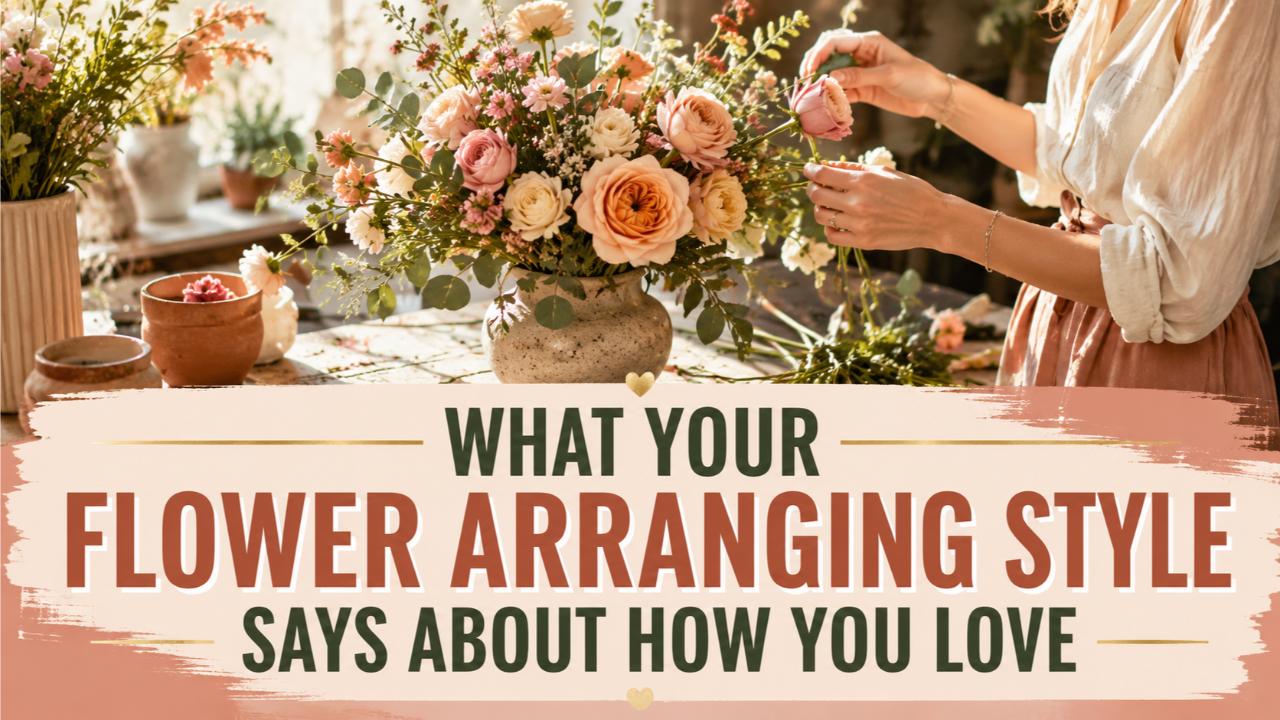
Ikebana asks a different question than most flower arranging does, not how much can you fit in, but how little really needs to be there. That single shift in thinking tends to reveal a lot about how someone's mind genuinely works, whether they think in terms of subtraction or addition, structure or intuition, rules or deliberate breaks from them.
What You Take Away, Not What You Add
Some people are drawn to a minimalist approach, a few stems and a lot of open space, because their instinct is to keep removing until only the essential remains. That's not a lack of creativity, it's a genuinely disciplined way of thinking, trusting restraint more than abundance. Others want a classic, balanced structure instead, following established proportions carefully, because clear rules give their thinking somewhere solid to stand. A third instinct wants something openly unconventional, breaking the expected shape on purpose, because their mind naturally looks for the version nobody else would try first.
Neither instinct requires abandoning the other completely either, since restraint and structure aren't opposites so much as two different answers to the same underlying question of where certainty should come from. A minimalist trusts restraint itself to provide the certainty. A traditionalist trusts an established proportion system instead. Both are looking for the same solid ground, just built from different materials. Neither one is a shortcut around genuine uncertainty, they're just different tools for managing it.
Where The Mind Shows Up
Two more instincts round out the picture. Some people let the natural lean of a stem or branch guide the whole arrangement, because they think intuitively, following what's already there rather than imposing a plan on top of it. Others think just as much about the empty space between the flowers as the flowers themselves, a genuinely conceptual instinct that finds meaning in what's absent just as much as what's present. And some don't plan at all, adjusting as they go, trusting that a good arrangement can come together without ever being fully mapped out in advance.
It's worth noticing which of these instincts shows up first when someone's genuinely stuck too, not only when things are going smoothly. Someone who normally plans meticulously might default to intuitive, natural-lean thinking the moment a plan stops working, since instinct often takes over exactly where a system reaches its limit.
Six thinking styles show up across the results here: the minimalist, the traditionalist, the avant-gardist, the nature follower, the negative-space thinker, and the freeform improviser. None of these six is a smarter way to think, they're just different honest shapes that a working mind can take.
Answer with your genuine instinct rather than the approach that sounds the most impressive on paper. The same pattern that shows up in how someone arranges flowers tends to show up in how they approach a blank page, a cluttered room, or any problem that starts with too many options and needs a real decision about what genuinely stays. Watching which of these instincts kicks in first under real pressure, not just in a relaxed hobby setting, tends to be the more honest test of the two.