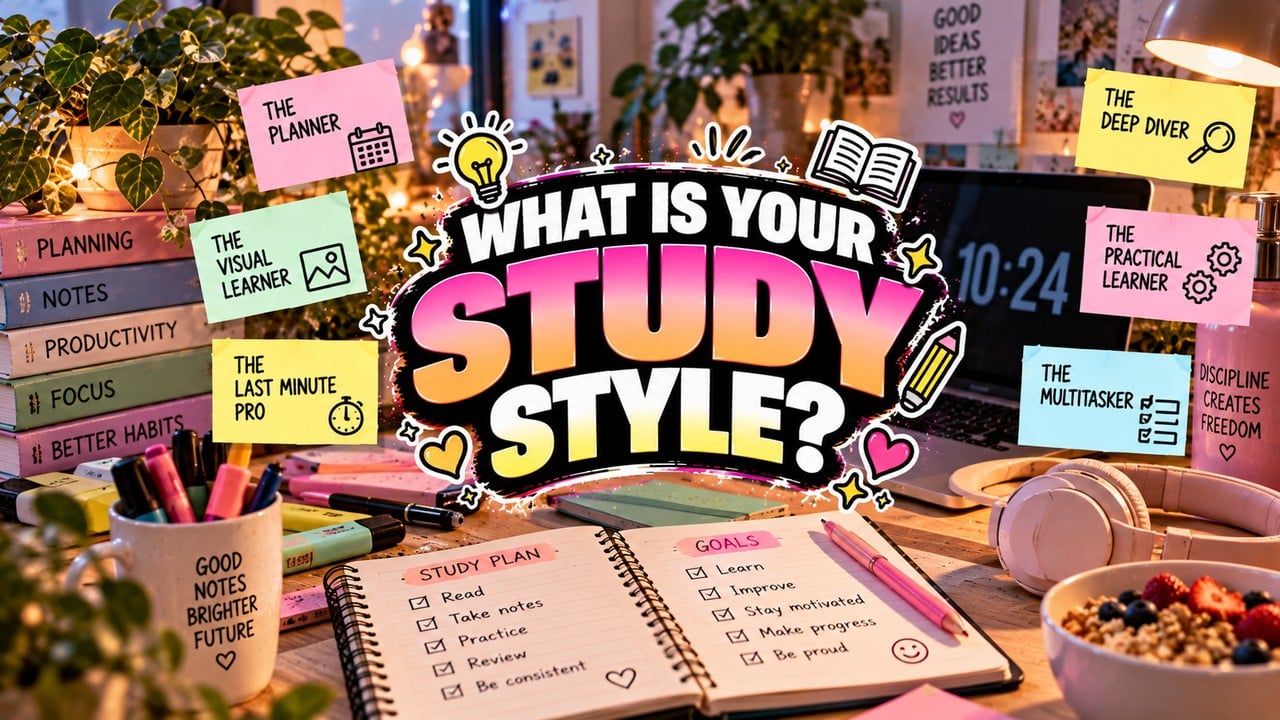
Open a backpack at random and you'll find one of two extremes almost immediately. Either a system, tabs, colors, labels, a place for everything, or a pile, one dented folder holding four subjects and a permission slip from October. Both people are functioning fine. They're just running completely different operating systems.
Some People Color-Code. Some People Grab Whatever's Closest.
Neither instinct is laziness or obsession, they're just different answers to the same question: does external order help you think, or does it just add a layer of maintenance on top of a mind that was doing fine without it? Some people genuinely cannot focus in a cluttered space and need everything labeled before their brain will cooperate. Other people barely register mess at all, their thinking doesn't route through their environment the same way, so a chaotic folder changes nothing about how clearly they can work.
Then there's the whole separate category of people whose notebooks are covered in doodles, not distractions exactly, more like a second channel their brain needs open to process the first one. Margins full of drawings usually belong to someone who thinks in pictures before they think in words, and forcing that instinct into a plain, undecorated page can genuinely make their thinking worse, not better.
The Mind Behind The Mess, Or The Order
This quiz isn't interested in whether your backpack looks nice. It's interested in what your actual thinking process needs to function, and that shows up clearly in small daily habits: how you take notes in a class you care about, what helps you focus, what your relationship with clutter really is rather than what you think it should be. A person who needs everything labeled isn't uptight, they're just running a mind that loses information without an external anchor. A person who doesn't mind mess isn't careless, their mind holds onto things fine without one.
Six types show up by the end here: the color-coder who needs categories to function, the doodler who thinks in pictures, the blank-slate minimalist who needs quiet space to process anything, the sticker-covered creative whose mind moves in bursts and color, the label-everything type who organizes rather than removes, and the whatever's-closest type who barely notices the system at all because their brain was never routing through it in the first place.
None of these six run on the same operating system, and trying to force one type into another's habits usually backfires for weeks before anyone notices why. A color-coder handed a blank notebook with no structure will spend more energy fighting the format than thinking. A doodler forced to keep notes plain and linear will lose half their ideas somewhere between the thought and the page.
Teachers who've watched hundreds of students organize their materials over the years will tell you the correlation between neatness and grades is much weaker than people assume. A meticulously labeled binder can belong to someone who's still catching up conceptually, and a chaotic folder can belong to someone acing every test, because organization style says almost nothing about intelligence, only about which external structure a particular mind happens to need or not need.
Answer with whatever you'd grab off a shelf, not whichever version looks more put together, and you'll probably recognize the result before you even finish reading it.