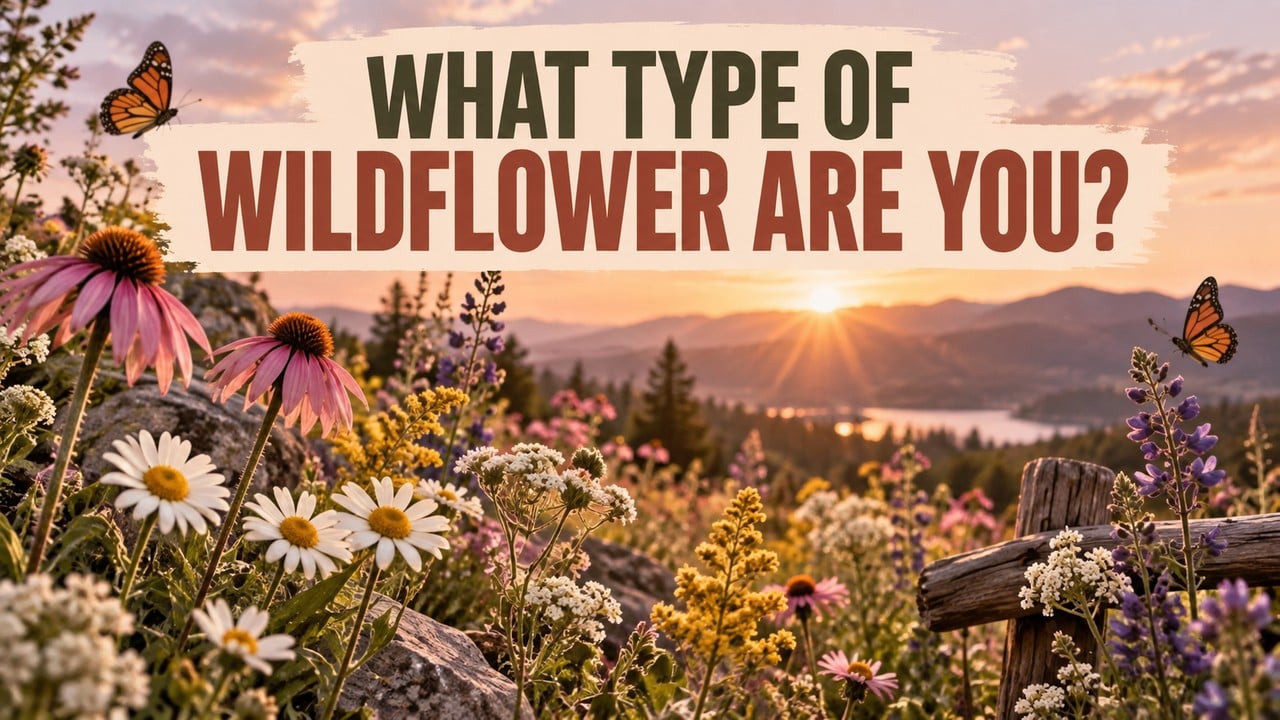
People have been assigning meanings to flowers for centuries, and the Victorians turned it into a whole coded language so that an entire argument could be conducted through a bouquet. What survives from that is a useful instinct, which is that different flowers carry genuinely different temperaments. A peony and a thistle are both plants. Nobody would ever confuse what they are saying.
The Flower You Like Is Not Always The Flower You Are
Everybody loves peonies. That is not a personality result, that is a fact about peonies. The more revealing question is which flower behaves the way you behave. Does it bloom enormously for ten days and then collapse? Does it come back every single year in the same spot regardless of what the winter did? Does it grow where nothing else will? Does it need staking and shelter and constant attention, or does it thrive in gravel with absolutely no help from anyone? Behaviour is the thing to match, and behaviour is considerably less flattering than colour.
Six Flowers And How They Live
The peony gives everything at once in a short, extraordinary window and asks to be supported while doing it. The thistle grows where the soil is poor, defends itself thoroughly, and turns out to be the most beautiful thing on the hill in September. The sweet pea climbs, needs something to hold, produces constantly and rewards anyone who keeps cutting it. The snowdrop arrives while everything else is still asleep, small and unremarkable at a distance, and it is the toughest thing in the garden. The dahlia is pure maximalism, endless variety, needs lifting and protecting through winter, and is worth every bit of the trouble. And the lavender is low, tough, aromatic and drought-tolerant, quietly holding a whole border together while everything flashier comes and goes.
What Do You Need To Bloom?
That question is where this stops being decorative. Some people need staking, meaning structure, support, someone holding the other end. Some people need poor soil, meaning they do their best work in difficult conditions and go soft when everything is handed to them. Some need to be cut back hard to come back stronger. Some need protecting through a specific season and are fine the rest of the time. Knowing which of those is true about you is worth more than any amount of general advice about motivation, because the conditions are the whole story with plants and it turns out they are with people too.
The Ones That Come Back
Worth noticing the divide between annuals and perennials, since it maps onto people uncomfortably well. Some people do a spectacular year and then need to be entirely re-established. Others come back in the same place every single spring, slightly bigger, with no fuss and no visible effort. Neither is better. But the spectacular annuals tend to burn out around people who assume the intensity is permanent, and the reliable perennials tend to get taken for granted precisely because nobody ever has to worry about them.
Nobody Wants To Be The Thistle
Predictable, and a shame. Of the six, the thistle is the one people recoil from, because prickly reads as a criticism rather than a description. Spend a minute on it though. A thistle grows on ground where nothing else will bother, holds the soil together on a bare hillside, feeds more insects than most of the pretty things in a border, and turns silver and extraordinary at the end of the season. The defences exist because the conditions demanded them, which is true of every prickly person you have ever met. If you got the thistle and felt slightly insulted, sit with it, because it may be the most competent result on the list.
Giving The Flower To Someone Else
There is a small use for this beyond your own result, which is thinking about the people around you. The sweet pea in your life needs something to climb, so give them structure and they will produce endlessly. The peony needs staking during their big stretch and space to collapse afterwards. The snowdrop needs someone to notice, because they will never point at themselves. And the lavender needs to be thanked occasionally, since they have never once asked for anything and everybody has quietly got used to that. Matching the support to the plant works better than treating everyone the same, in gardens and everywhere else.
Answer for how you grow rather than which one you would buy, and see which flower has your habits.